
October is one of the best times of year to be outside in Dallas. The temperatures finally begin to ease, neighborhoods start decorating, fall events fill the calendar, and Halloween brings plenty of activity to front porches and sidewalks.
For pets, though, all that excitement can feel very different.
Doorbells ring repeatedly. Strangers arrive in costumes. Candy appears everywhere. Decorations move, flash, or make unexpected sounds. Even pets who are normally confident can become overwhelmed when their familiar home suddenly feels louder and less predictable.
A little planning can help make Halloween safer and more comfortable for dogs and cats, whether they love being part of the action or would rather sleep through the whole thing.
Keep Halloween Candy Completely Out of Reach
Most pet parents know chocolate is dangerous for pets, but Halloween creates an unusually high number of opportunities for pets to get into things they should not.
Candy bowls may sit near the front door. Kids leave treat bags on the floor. Wrappers end up on couches or under tables. Guests may also offer pets food without realizing it could be unsafe.
Chocolate is one of the biggest concerns, particularly dark chocolate and baking chocolate. Sugar-free candies and gum may also contain xylitol, which is extremely dangerous for dogs.
Even candy that does not contain a toxic ingredient can cause trouble if a pet eats enough of it. High amounts of sugar and fat can lead to digestive upset, and wrappers can become choking hazards or cause intestinal problems if swallowed.
The easiest approach is to treat Halloween candy the same way you would medication or household chemicals. Keep it somewhere pets cannot access, even when no one is watching.
If you are hosting friends or family, it is also worth giving guests a quick reminder not to share treats with pets.
Decorations Can Be More Interesting Than You Expect
Halloween decorations are designed to catch attention, and pets notice them too.
Cats may investigate dangling decorations or electrical cords. Dogs may become curious about pumpkins, candles, or objects that suddenly appear in areas they normally walk through.
Whenever possible, secure decorations so pets cannot pull them down, chew them, or become tangled.
Lit candles inside jack-o’-lanterns should be positioned well away from curious noses and wagging tails. Battery-powered options can reduce the fire risk, although they should still be kept somewhere pets cannot chew or swallow small pieces.
Glow sticks and glow jewelry should also stay out of reach. A pet that bites into one may experience irritation and excessive drooling.
Take a quick look around your decorations from your pet’s perspective. If something hangs at nose level, moves unexpectedly, or looks like an excellent new toy, your pet may agree.
The Front Door Is Often the Biggest Halloween Risk
For many pets, the most stressful part of Halloween is not the costumes or candy. It is the front door.
Trick-or-treaters can mean dozens of doorbell rings and repeated openings throughout the evening. Dogs may become increasingly excited or anxious, while cats who normally show little interest in escaping may suddenly bolt when startled.
Before the evening gets busy, decide how you will manage your pet during arrivals.
Some dogs can remain comfortably behind a baby gate or other barrier. Others will be much happier spending the evening in a quieter room away from the entryway.
Cats are often safest in a secure room before trick-or-treaters begin arriving, particularly if they tend to investigate open doors.
It is also a good time to confirm that collars and identification tags are secure and that your pet’s microchip information is current. Hopefully you will never need that information, but Halloween is not the night to discover an old phone number is still on file.
Give Nervous Pets Somewhere to Get Away From It All
Not every pet wants to participate in Halloween.
For animals who are sensitive to noise, visitors, or unusual activity, creating a quiet retreat can make the evening much easier.
Choose a familiar room away from the busiest part of the house and include things your pet already enjoys, such as:
- Their normal bed or blanket
- Fresh water
- Favorite toys
- A safe enrichment activity
- Soft music or white noise
- A litter box for cats
The goal is not to isolate your pet as punishment. It is to give them a comfortable place where they do not have to process every knock, costume, laugh, and opening door.
If your dog already uses a crate as a comfortable resting space, that may also be an option as long as the crate remains associated with relaxation rather than confinement.
For pets who become seriously distressed by visitors or noise, talk with your veterinarian ahead of the holiday about appropriate ways to manage anxiety.
Costumes Should Be for Pets Who Actually Enjoy Them
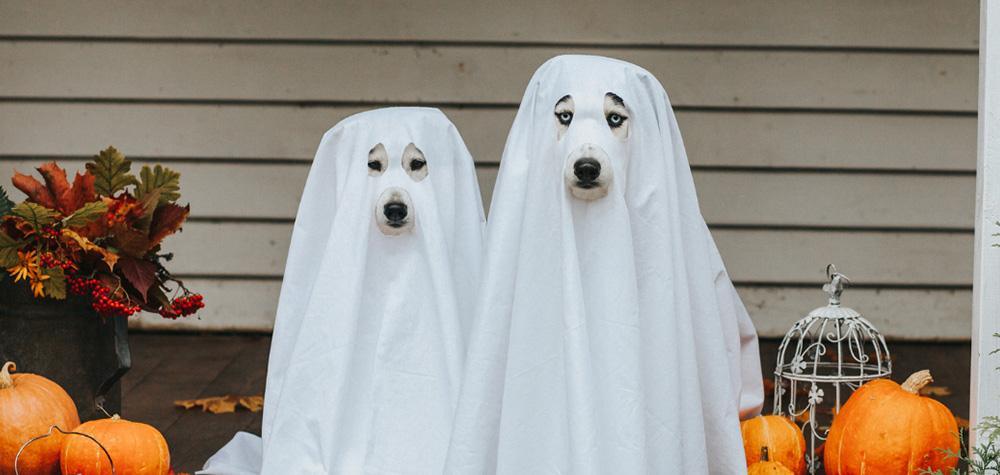
There is nothing wrong with a Halloween costume if your pet is comfortable wearing one.
The important part is paying attention to the pet rather than the photo.
A costume should not interfere with:
- Breathing
- Vision
- Hearing
- Walking
- Bathroom needs
- Normal body movement
Avoid pieces that can easily be chewed off or swallowed, and do not leave a costumed pet unsupervised.
Watch your pet’s body language too. Freezing, trying to remove the costume, excessive panting, lowered posture, or repeated attempts to hide may be signs that dressing up simply is not fun for them.
Some pets would much rather wear a festive bandana or skip the costume entirely.
They can still celebrate.
A Walk Before the Festivities Can Help
For dogs, getting outside before neighborhood activity ramps up can make the evening easier.
A walk earlier in the day gives your dog a chance to use the bathroom, move their body, sniff around, and enjoy some one-on-one time before the house gets busy.
Timing matters. Once trick-or-treating begins, sidewalks can become crowded with children, costumes, decorations, and other dogs.
Even a dog who normally loves neighborhood walks may find all of that stimulation overwhelming.
Completing the longer walk earlier and relying on a shorter bathroom outing later can be a much more comfortable plan.
If you do go out after dark, keep your dog securely leashed and consider reflective gear or a light so both of you are easier to see.
Remember That Halloween Can Be Stressful for Cats Too
Cats sometimes disappear from the Halloween conversation because they are not usually going trick-or-treating.
That does not mean they are unaffected.
Repeated doorbell rings, unfamiliar voices, rearranged furniture, decorations, guests, and open doors can all change the environment they rely on.
A cat who normally greets visitors may decide to hide for the evening. That is fine.
Allow them to choose how much interaction they want, and make sure food, water, resting areas, and litter boxes remain accessible.
If your cat has a favorite hiding place, avoid blocking it with decorations or party supplies. Familiar spaces can be especially comforting when the rest of the house feels unusual.
Keep Medications and Special Care on Schedule
Halloween can make the evening busy enough that normal pet routines get pushed aside.
If your pet takes medication, requires regular bathroom breaks, or follows a specific feeding schedule, try to keep those parts of the day consistent.
For pets with medical needs or significant anxiety, dependable care can become especially valuable when the household is distracted by guests and festivities.
DTX Pets can help maintain those familiar parts of the day, whether that means a walk before trick-or-treating begins, a drop-in visit, medication support, or extra attention for a pet who does better with a calmer routine.
The point is not to remove your pet from the celebration completely. It is to make sure their needs do not get lost in everything else happening around them.
Make Halloween Fun on Their Terms
Halloween does not need to be stressful for pets.
Some dogs will happily greet visitors and show off their costume. Others will prefer a quiet room and a good nap. Some cats may spend the evening watching from a safe distance, while others will decide Halloween is an excellent reason to disappear under the bed until morning.
All of those responses are perfectly reasonable.
By keeping candy and decorations secure, managing doors carefully, providing a quiet retreat, and paying attention to your pet’s comfort level, you can enjoy the holiday without asking your pet to tolerate more than they are comfortable with.
At DTX Pets, our goal is always to help pets feel safe, comfortable, and cared for in their own home, even when the day looks a little different than usual.